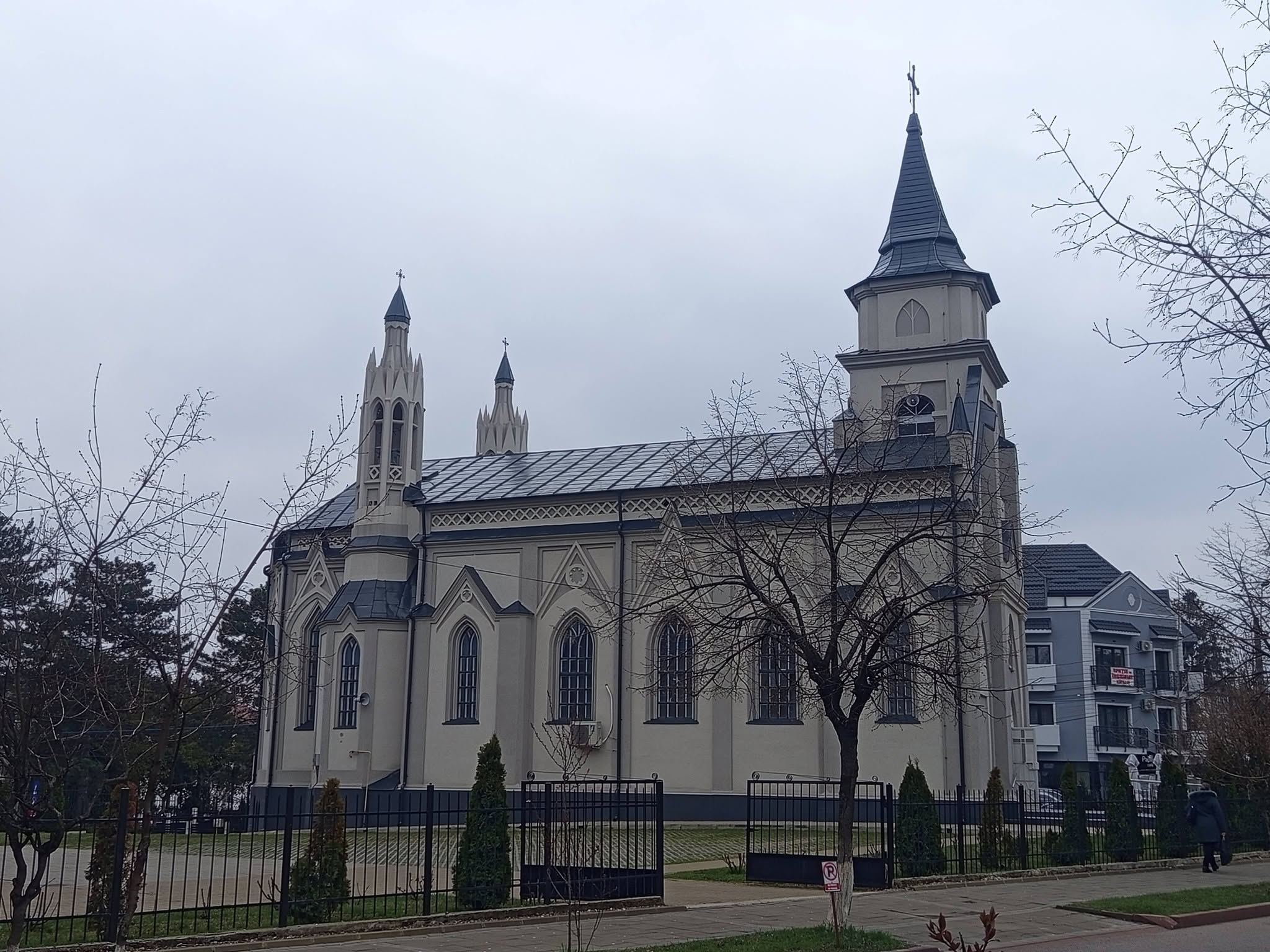
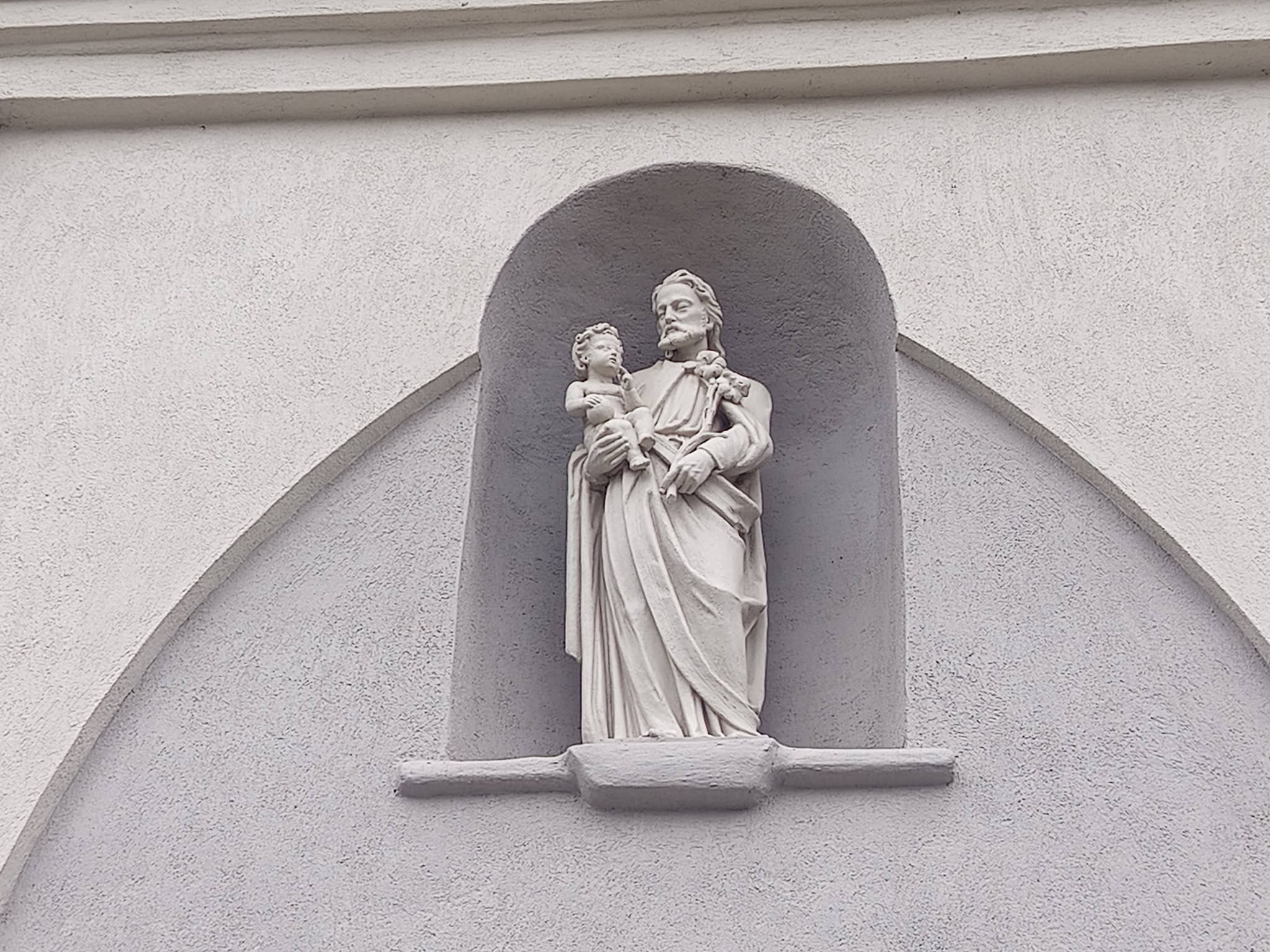
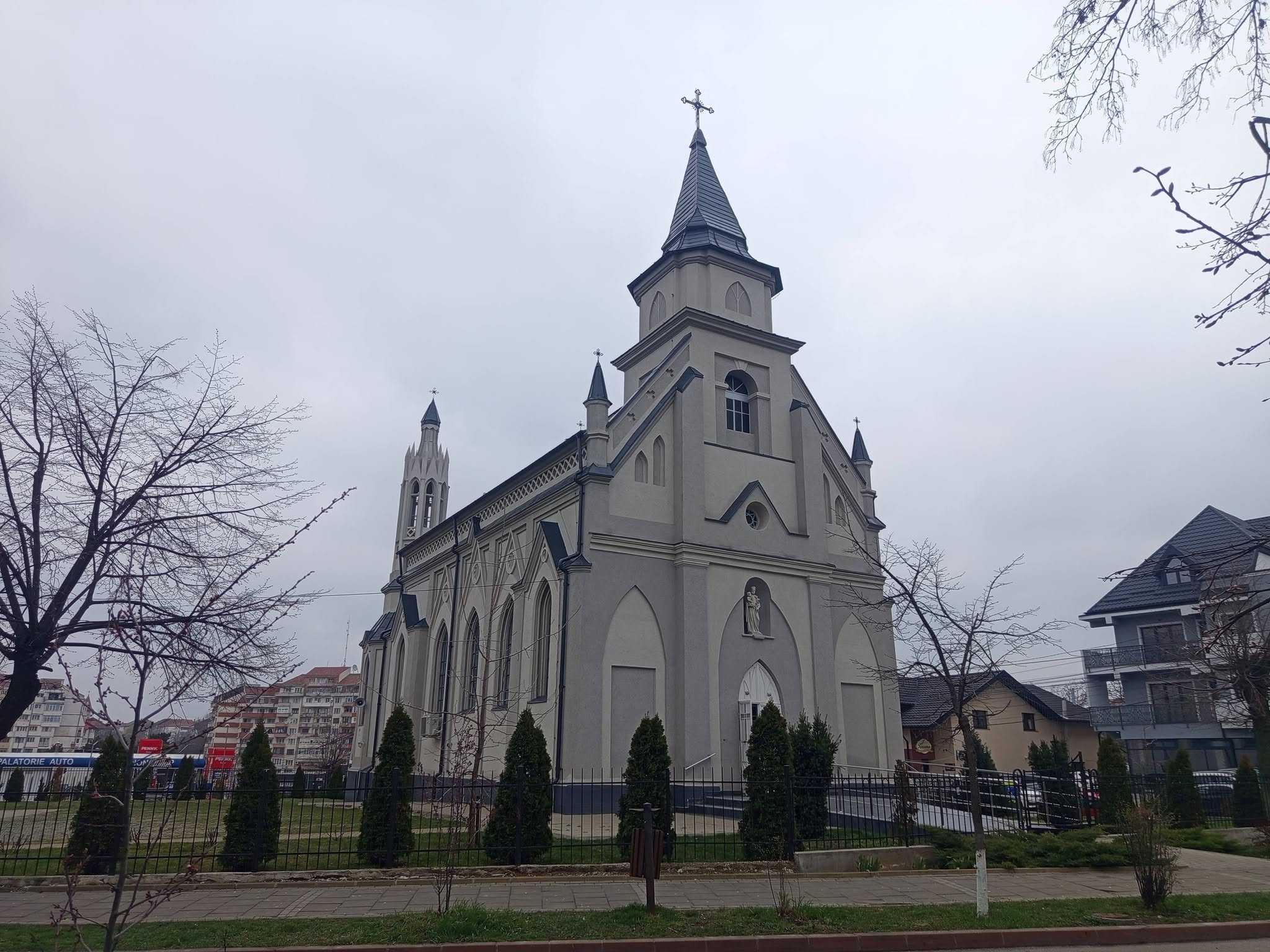
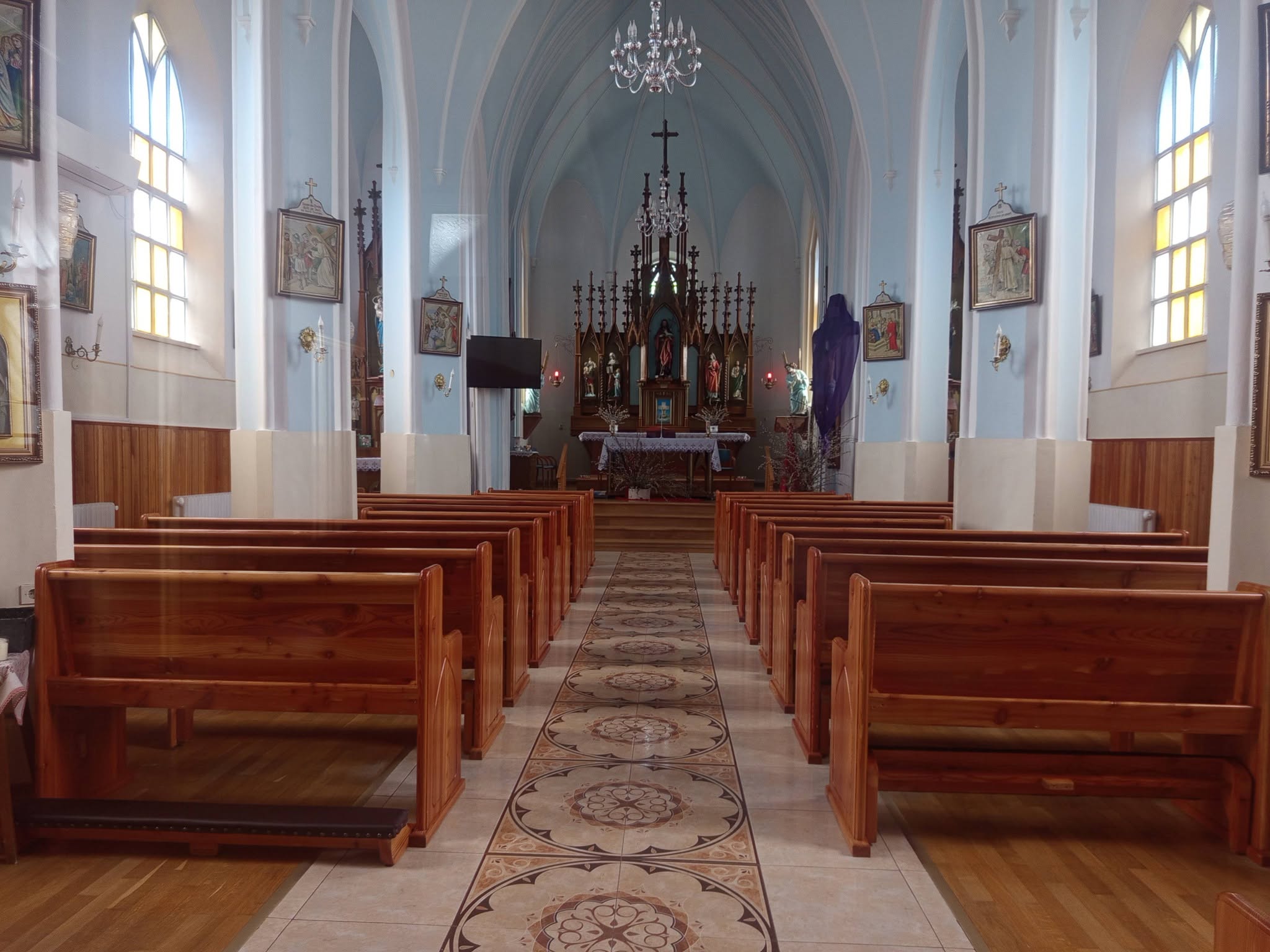
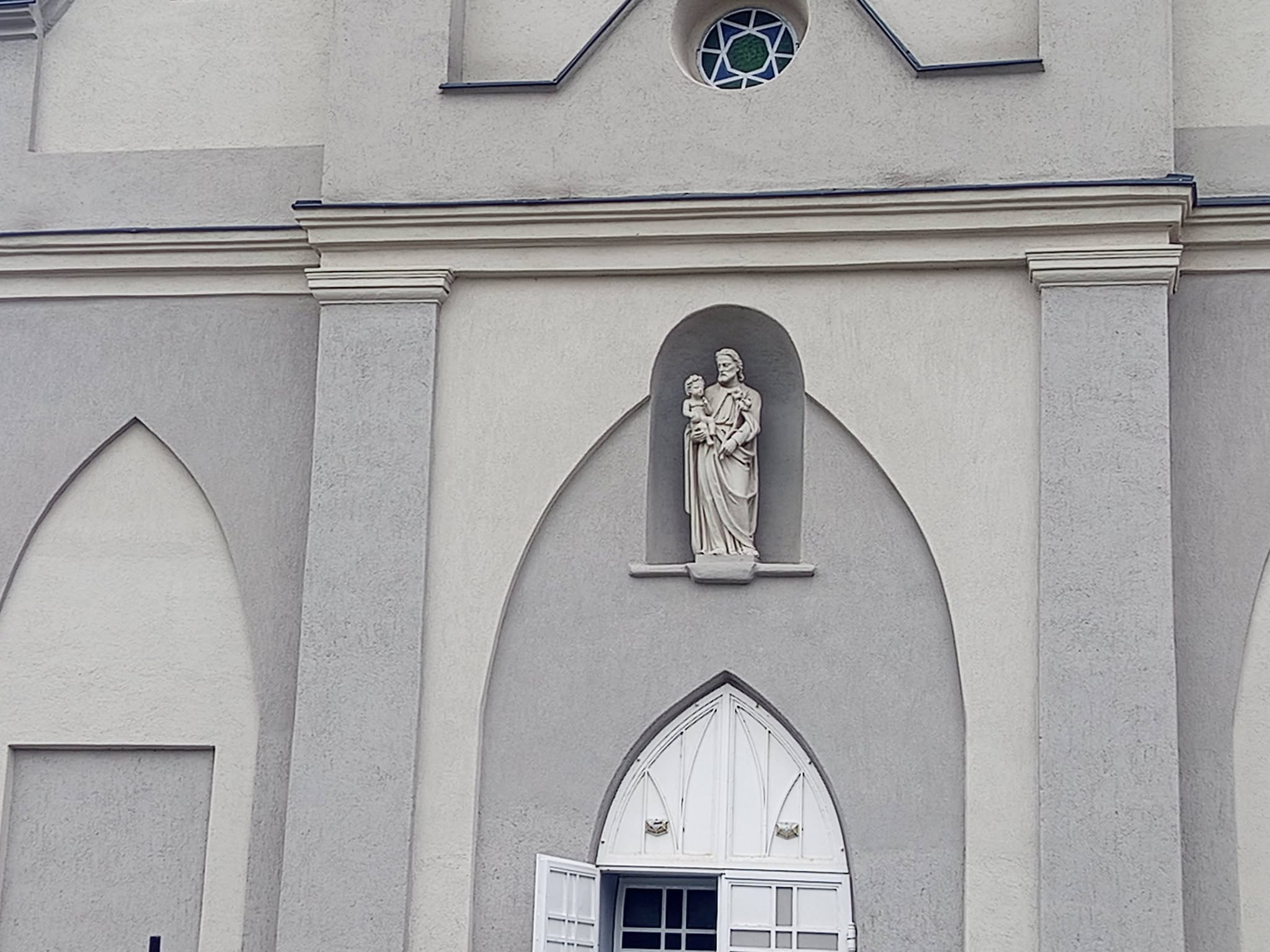
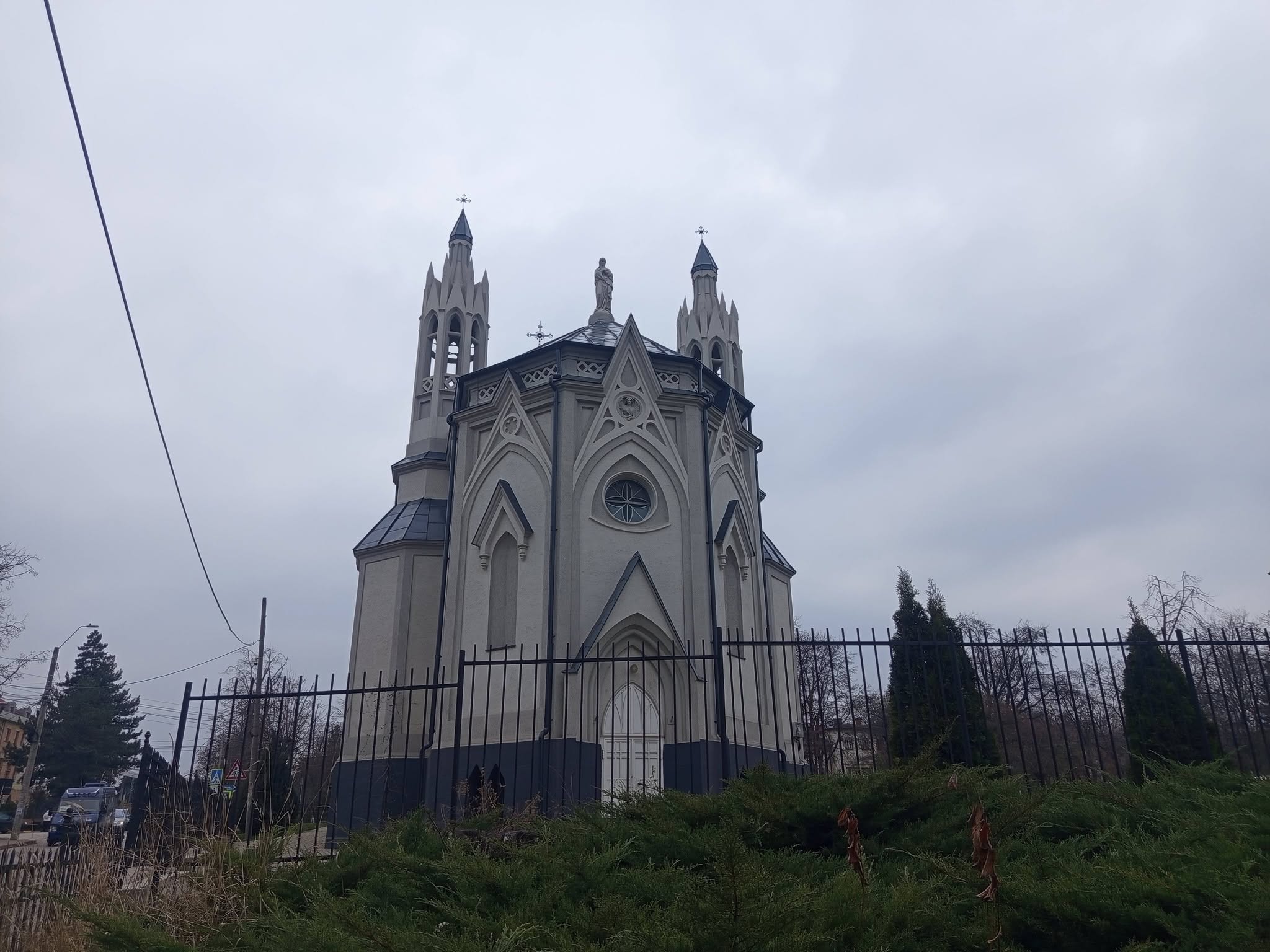
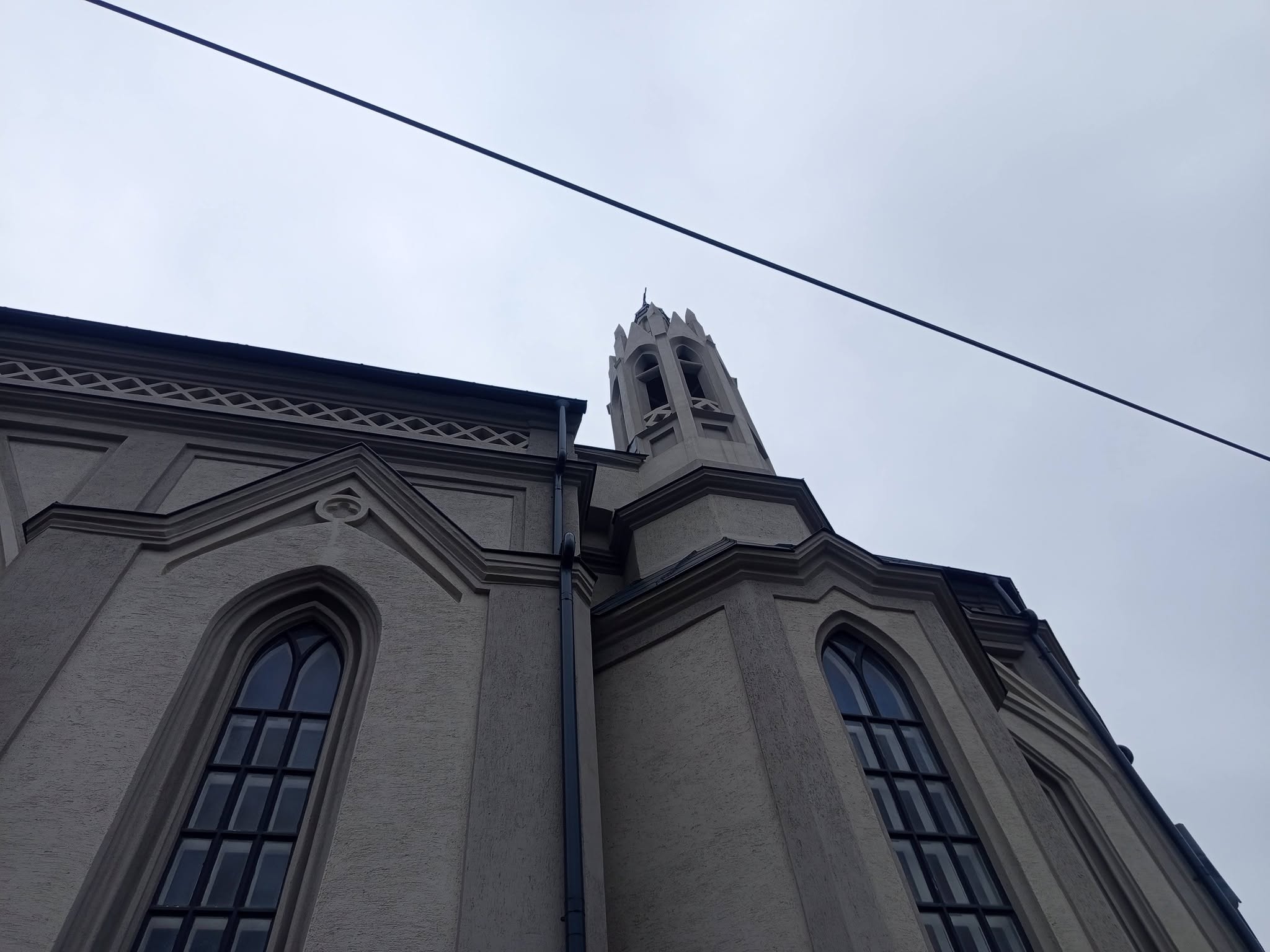
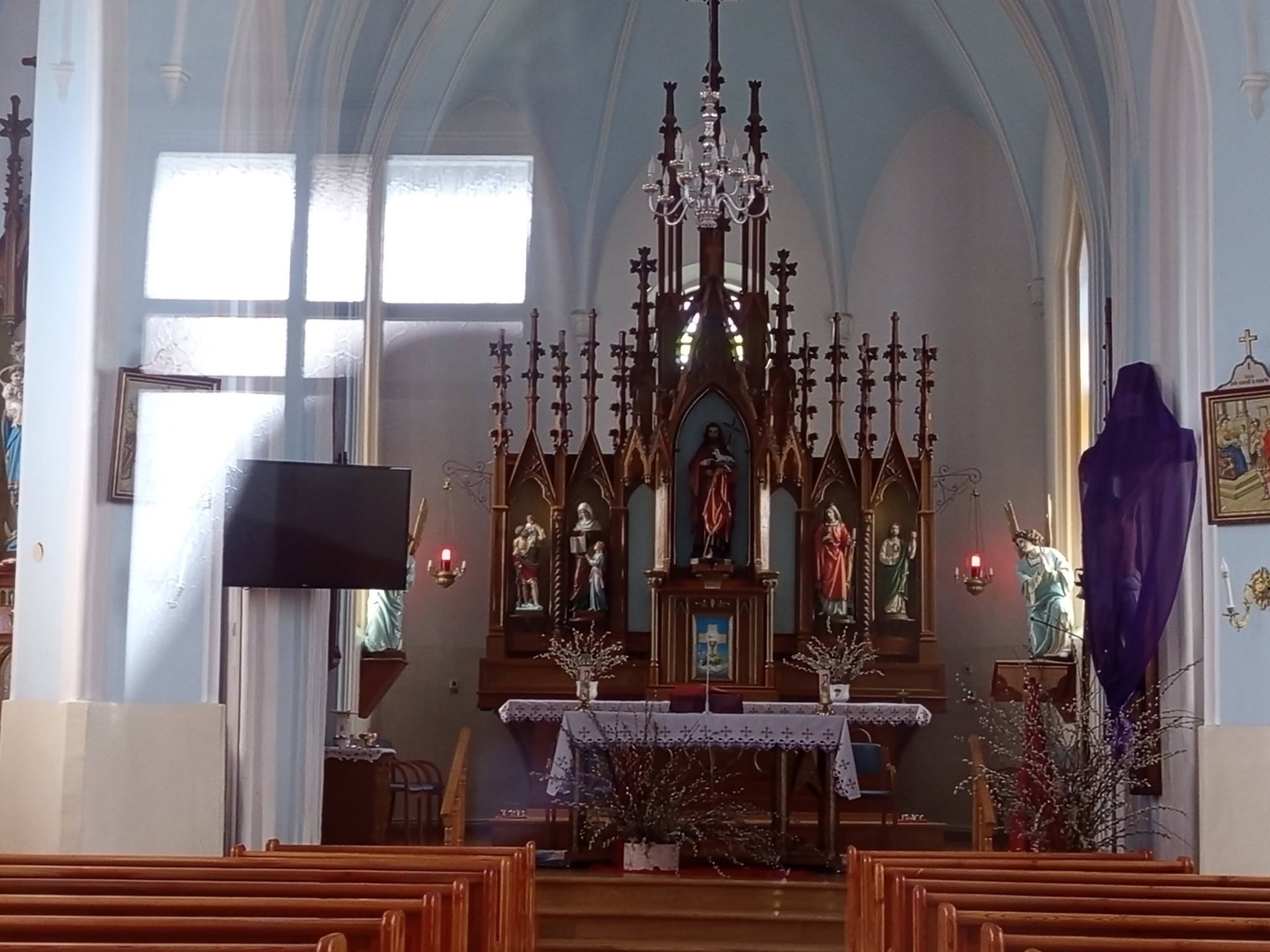
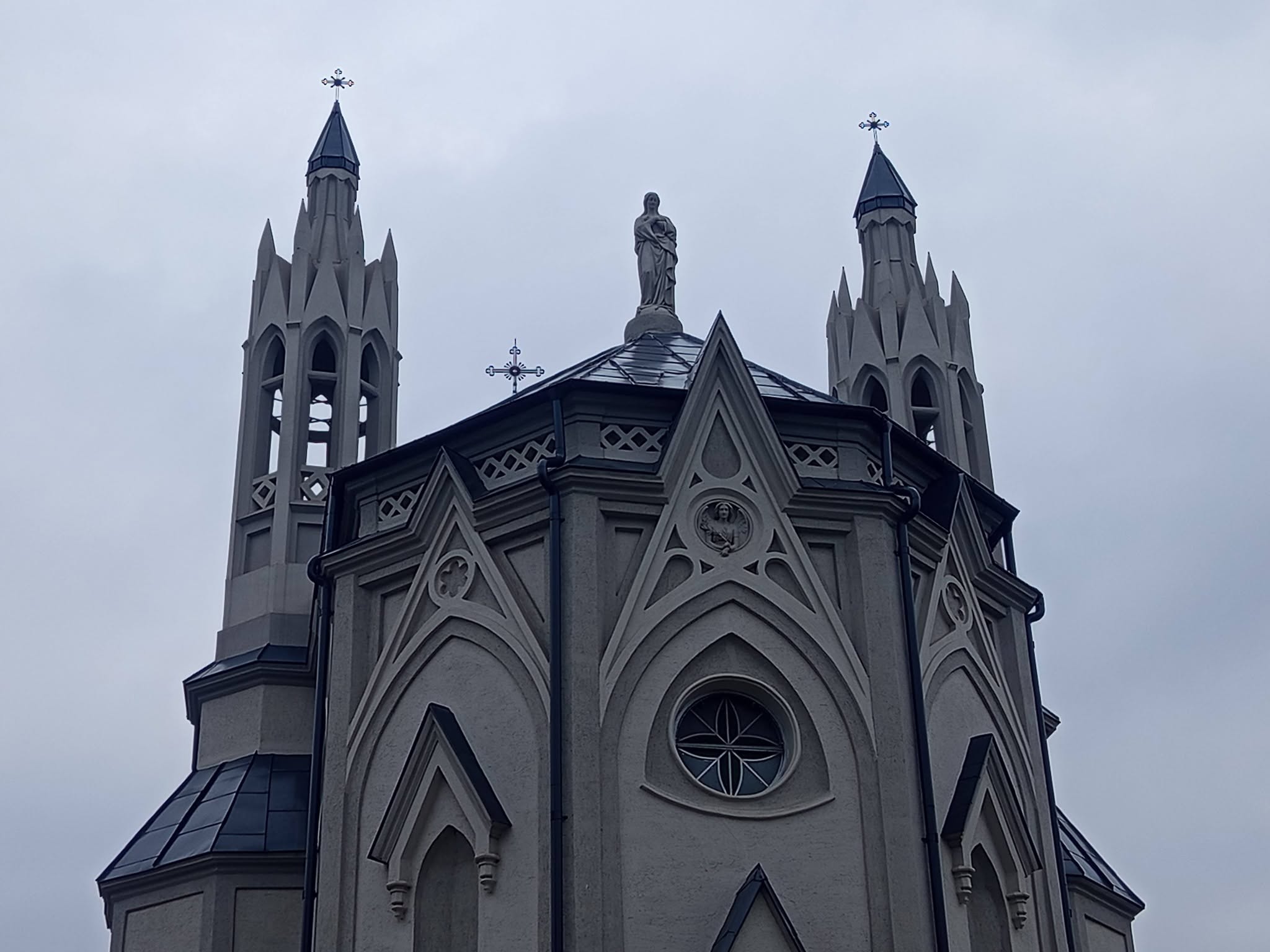
Since it’s Sunday, I’d like to introduce you to a church that is probably less well-known to many of my readers: the Roman Catholic Church of the Nativity of St. John the Baptist in Botoșani.
The first record of Catholics in Botoșani was found in the old parish register of Horlești, which records a baptism on December 8, 1781, in “Butuszan.” Another baptism was recorded on November 14, 1784, but both entries were crossed out and the note “they transferred to the Botoșani Parish” was added.
During the time of Bishop Ioan-Filip Paroni (1811–1825), his correspondence indicates that there was a plot of land belonging to the Catholic community in Botoșani and that this land was lost due to the negligence of the faithful. To preserve the tradition of a Catholic community in Botoșani, the same bishop would send a priest from Iași several times a year to celebrate Mass for the 15 Catholic families living in Botoșani at that time.
The opening of logging operations in Northern Moldova attracted many Armenian Catholics, as well as many Poles. According to some documents in the archives of the Catholic Diocese of Iași, it appears that the Armenian Catholics also had their own priest, a Franciscan named Fr. Ambrosius Wolski. From the same documents, we learn that another priest, a Pole simply named Cajetanus, reportedly wanted to build a church in Botoşani, but the Prefect of the Mission did not assist him. Local tradition holds that at that time there was a chapel in the old Catholic cemetery in Botoşani, where services were held whenever the priest visited Botoşani. The Superior of the Mission, Fr. Carol Magni, succeeded in building a chapel in Botoşani in 1836.
Construction of the church in Botoşani, on its current site—the location of the former chapel in the old Catholic cemetery—began in 1846 under the supervision of the parish priest, Fr. John the Baptist Dornseiffer. Fundraising for the construction took place in many localities, even abroad. Emperor Francis I of Austria donated 500 florins from the redemption fund. On November 3, 1847, the church was consecrated by Bishop Paul Sardi, together with two other priests from Iași and an Armenian Catholic priest from Suceava.
After the opening of the Vereşti-Botoşani railway in 1872, the Catholic population grew as a result of the technical and administrative staff at the railway stations, and as a result, the church became too small. The church was expanded with two side aisles, and the entire structure was redesigned in the Neo-Gothic style, as it remains today. For a time, the church was administered by Jesuit priests.
The repatriation of ethnic Germans following the upheaval of 1940 led to a significant decline in the size of the Catholic community in Botoşani, but later the number of believers increased again with the settlement here of Catholic workers from the local industrial and commercial enterprises.
As of December 31, 2020, there were 181 Catholic families in Botoşani, comprising 390 believers.
Have a blessed Sunday!
Gesta recommendations:
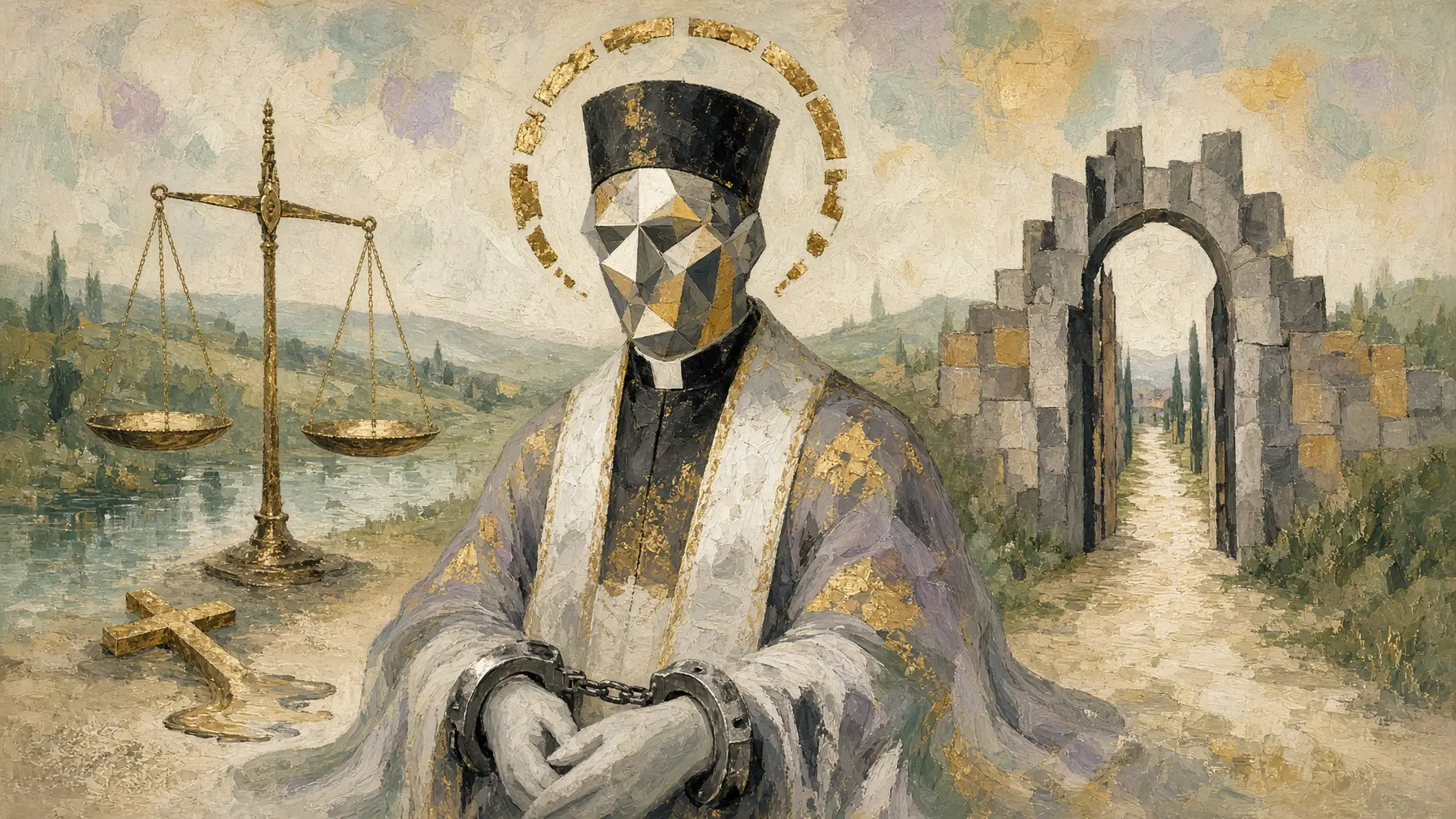
Pedophile priest arrested in Vaslui County
On Tuesday, the Orthodox Diocese of Huși suspended from service a priest from Vaslui County who was placed in pre-trial detention over the weekend on suspicion of sexual assault, rape of a minor and sexual acts with a minor. The priest of the parish of Parpanița, part of the town of Negrești, is now barred from performing any religious services. According to the police investigation, the priest…
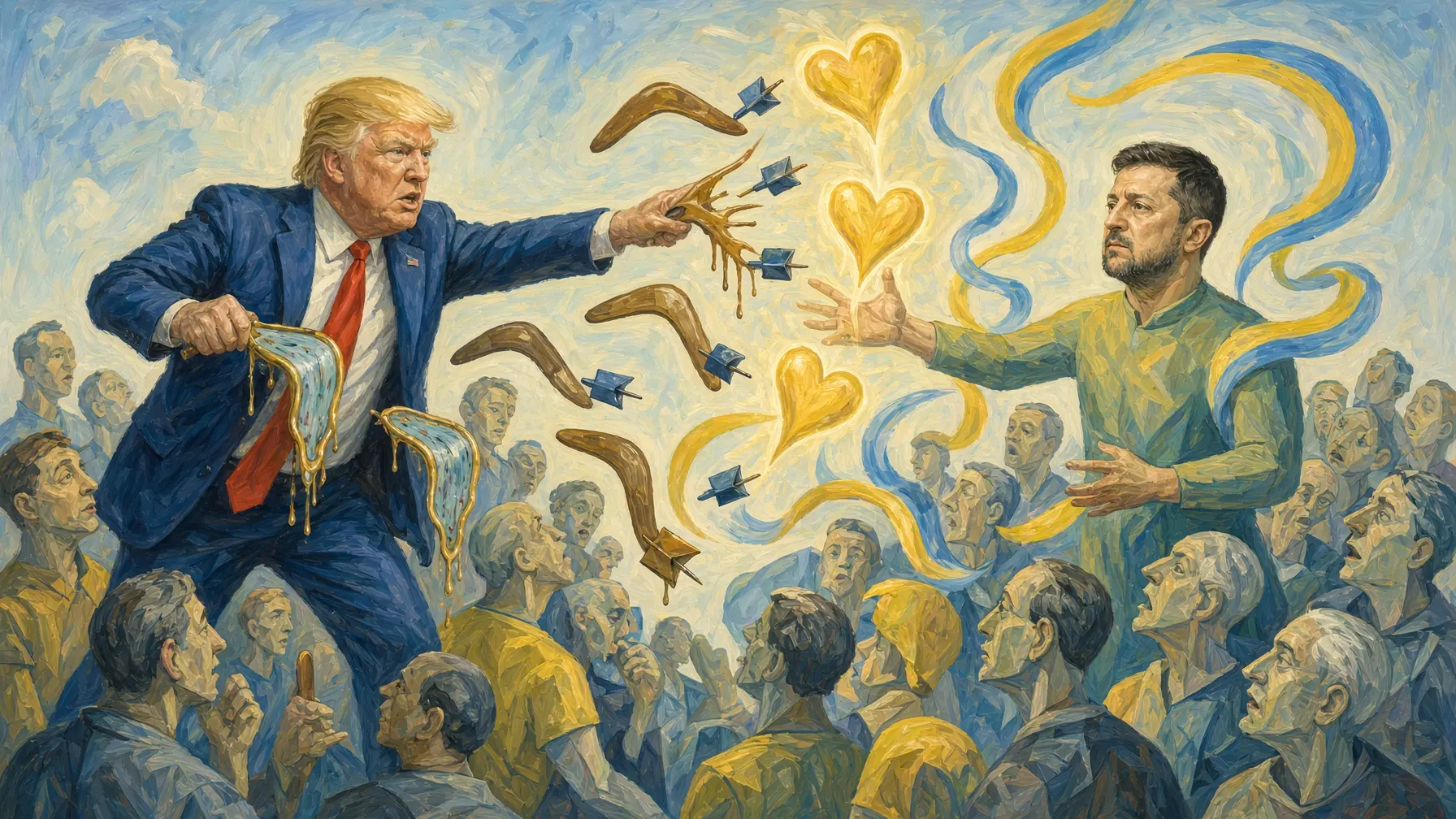
Trump is the best campaign manager: Ukrainians trust their president more since he started attacking Zelensky
We're getting close to the point where, if a head of state or government wants to win the next election, they should pay Donald Trump to publicly badmouth them. According to a survey conducted by the Kyiv International Institute of Sociology (KIIS) between October 8 and 16, 54 percent of Ukrainians trust Volodymyr Zelensky, while 41 percent do not.

Reuters: Iran is deliberately dragging out negotiations until the midterm elections
Iran is deliberately prolonging negotiations with the United States in order to politically weaken Donald Trump ahead of the November 3 midterm elections, G4Media reported, citing Reuters, which in turn cited three senior Iranian officials and an additional Iranian source. “The clerical leadership is determined not to give Trump a political victory,” the news agency quoted one of the anonymous…

Famine could strike Afghanistan this winter
About 19.2 million Afghans, more than a third of the country's population, are threatened by an acute food supply crisis, the UN Office for the Coordination of Humanitarian Affairs (OCHA) warned on Tuesday. "During the winter period from November to April, the number of people facing acute food insecurity is expected to reach 19.2 million," said Olga Cherevko, OCHA's spokesperson for Afghanistan,…
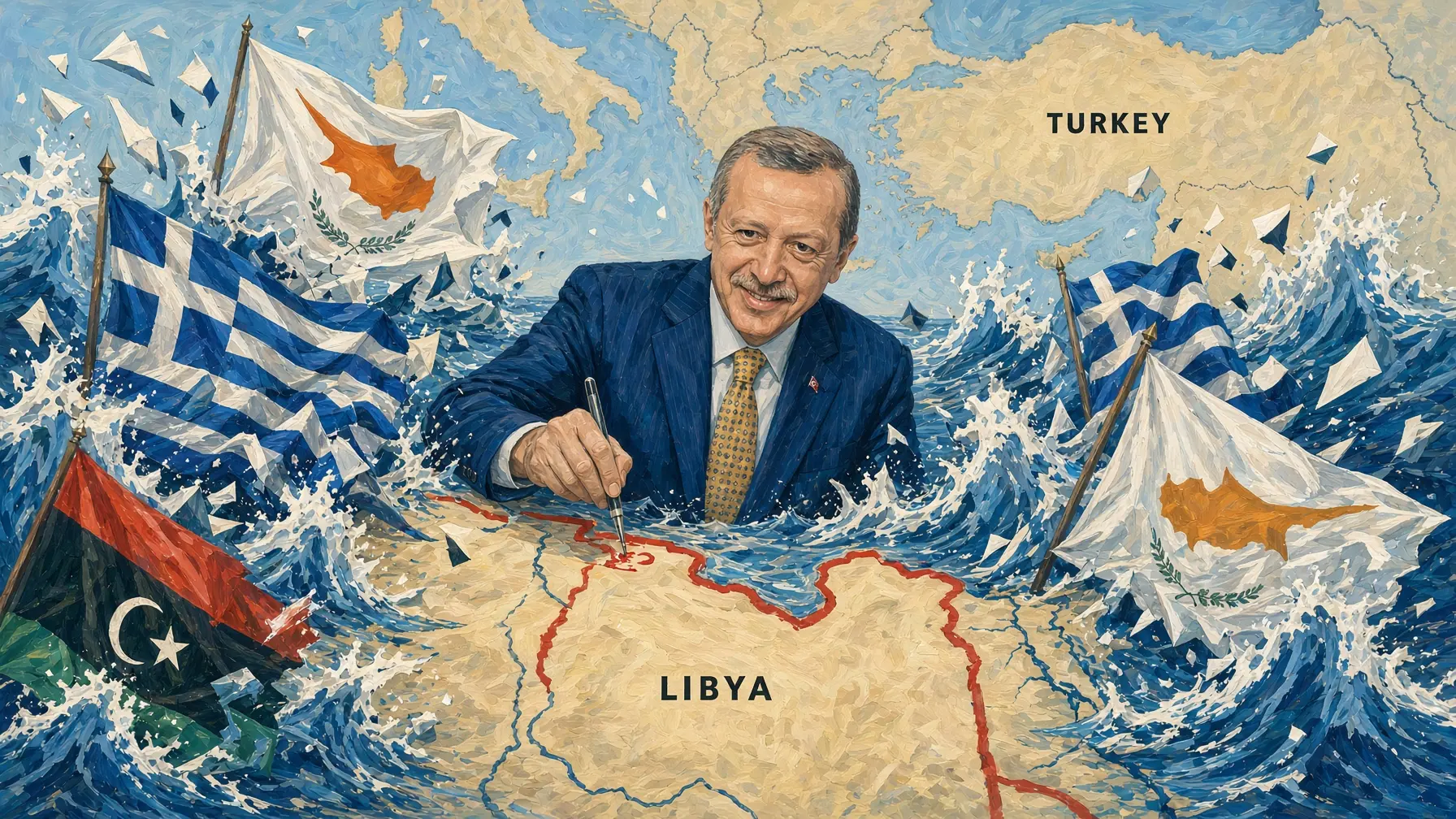
East Libya approves disputed Turkish maritime agreement, Athens and Nicosia outraged
On Tuesday, the parliament of eastern Libya approved the maritime boundary agreement that Turkey signed in 2019 with the Tripoli-based Government of National Accord, then internationally recognized. This retroactively grants the blessing of the eastern part of the country, controlled by General Khalifa Haftar, to a treaty that Greece, Cyprus and Egypt have considered unlawful from the outset.