Since it’s Shabbat, I’m going to introduce another synagogue in Romania: the Great Synagogue of Siret.
The first Jews settled in Siret around 1371, when Siret was granted city status. That year, a Jewish jeweler was hired at the court of the ruler of Moldavia. The town’s rapid development, due to its location on the route leading from Galicia (through Chernivtsi and Suceava) to Hungary, led to the settlement of several Jewish families in Siret even before the 16th century.
Of the town’s 7,240 inhabitants in 1880, Jews accounted for 43.1% of the population (3,122 inhabitants). In 1914, 3,500 Jews lived in the town. The Jewish community was organized along the lines of a guild, led by a staroste, and was subordinate to the community in Suceava until the mid-19th century, when it became an independent community. The community managed three funds: the “Leib Echner Fund,” which provided scholarships for Jewish students and non-students; the “Kalman Hecht Fund,” which supported Talmud Torah schools; and the “Aaron Blum Fund.” In addition to the Great Synagogue, there were four public synagogues and four private synagogues in the town.
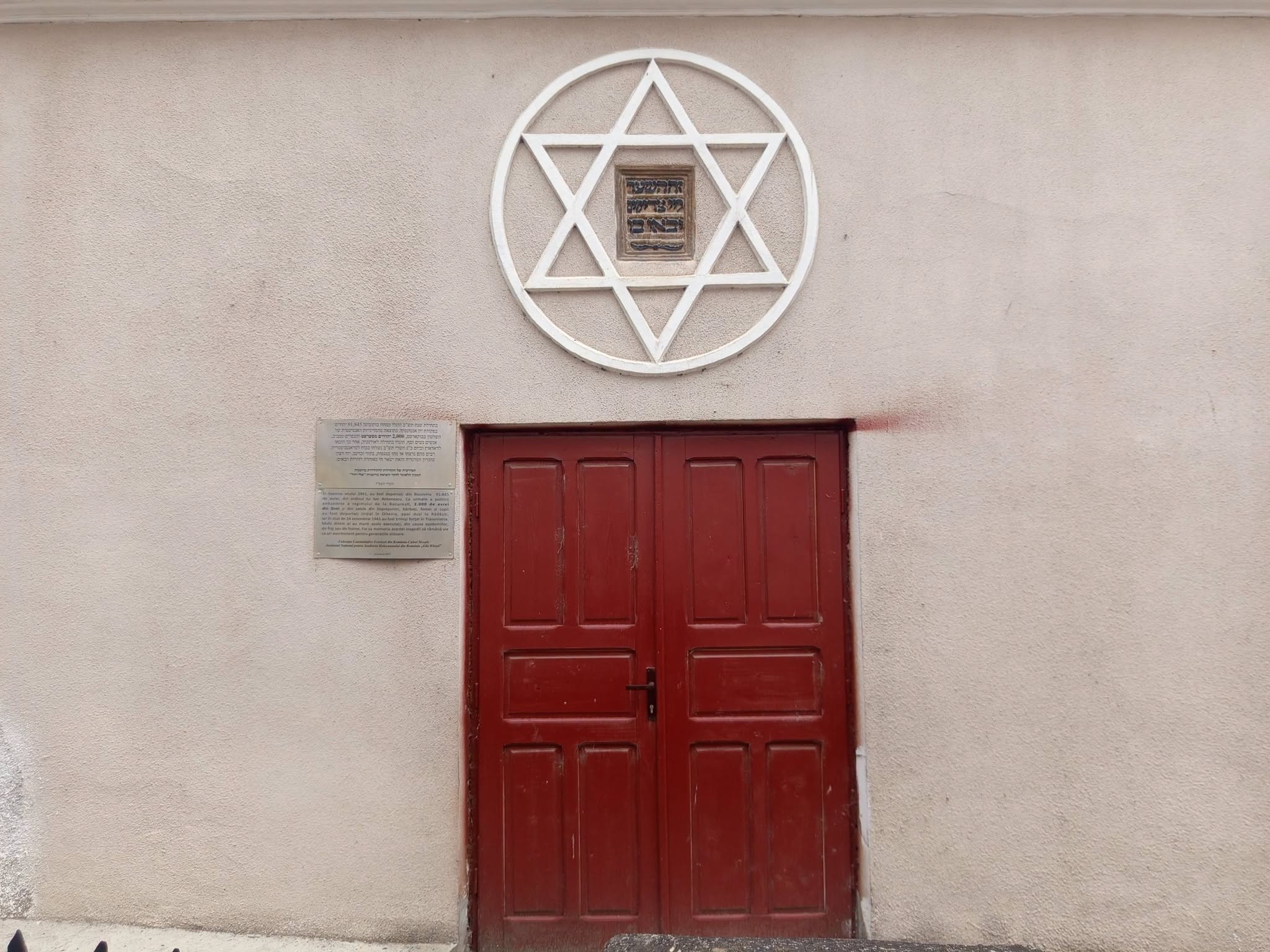
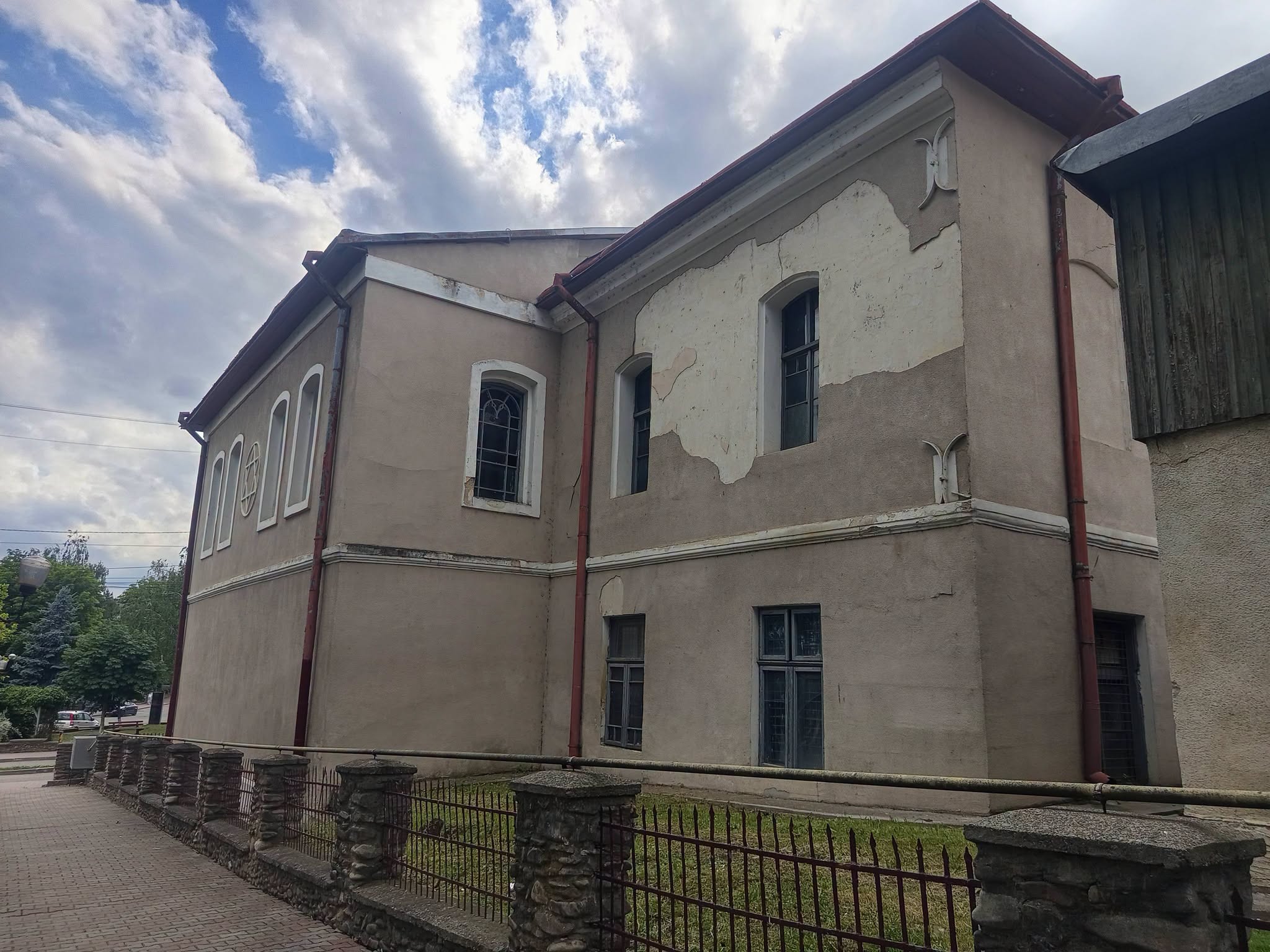
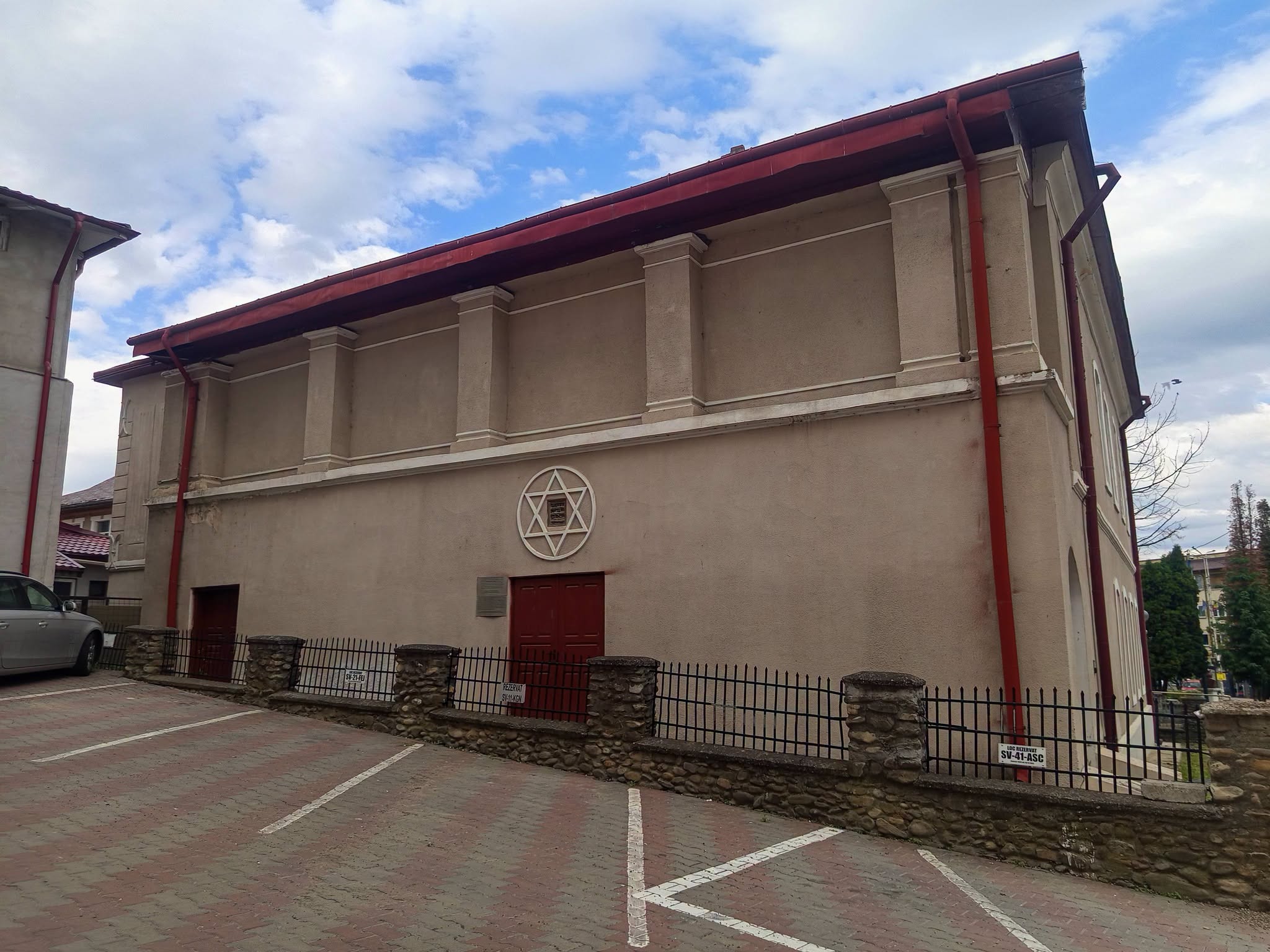
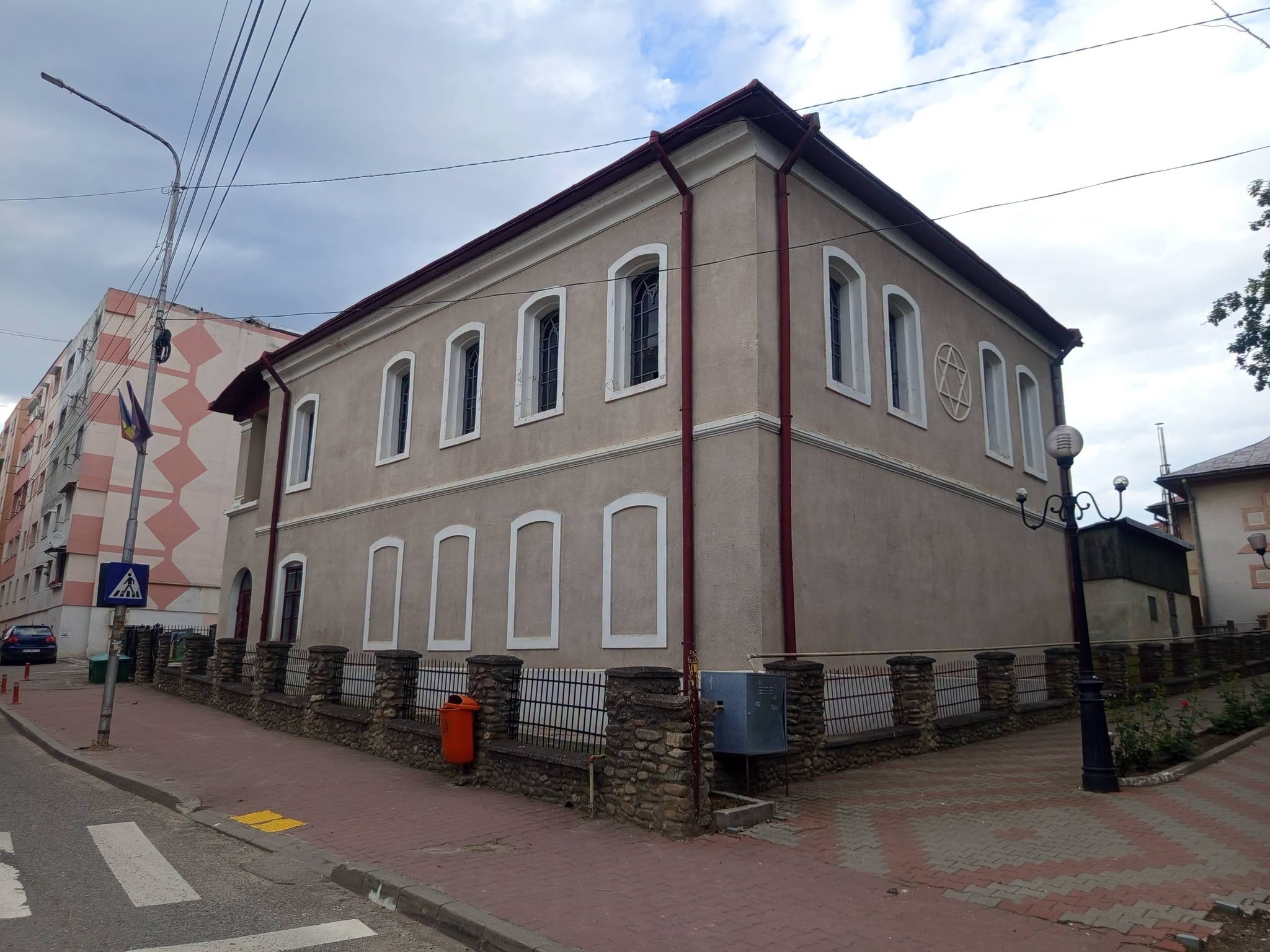
The Great Synagogue in Siret was built in 1840 in the town center. It is one of the oldest Jewish places of worship in northern Moldova. A Hasidic school also operated within this synagogue.
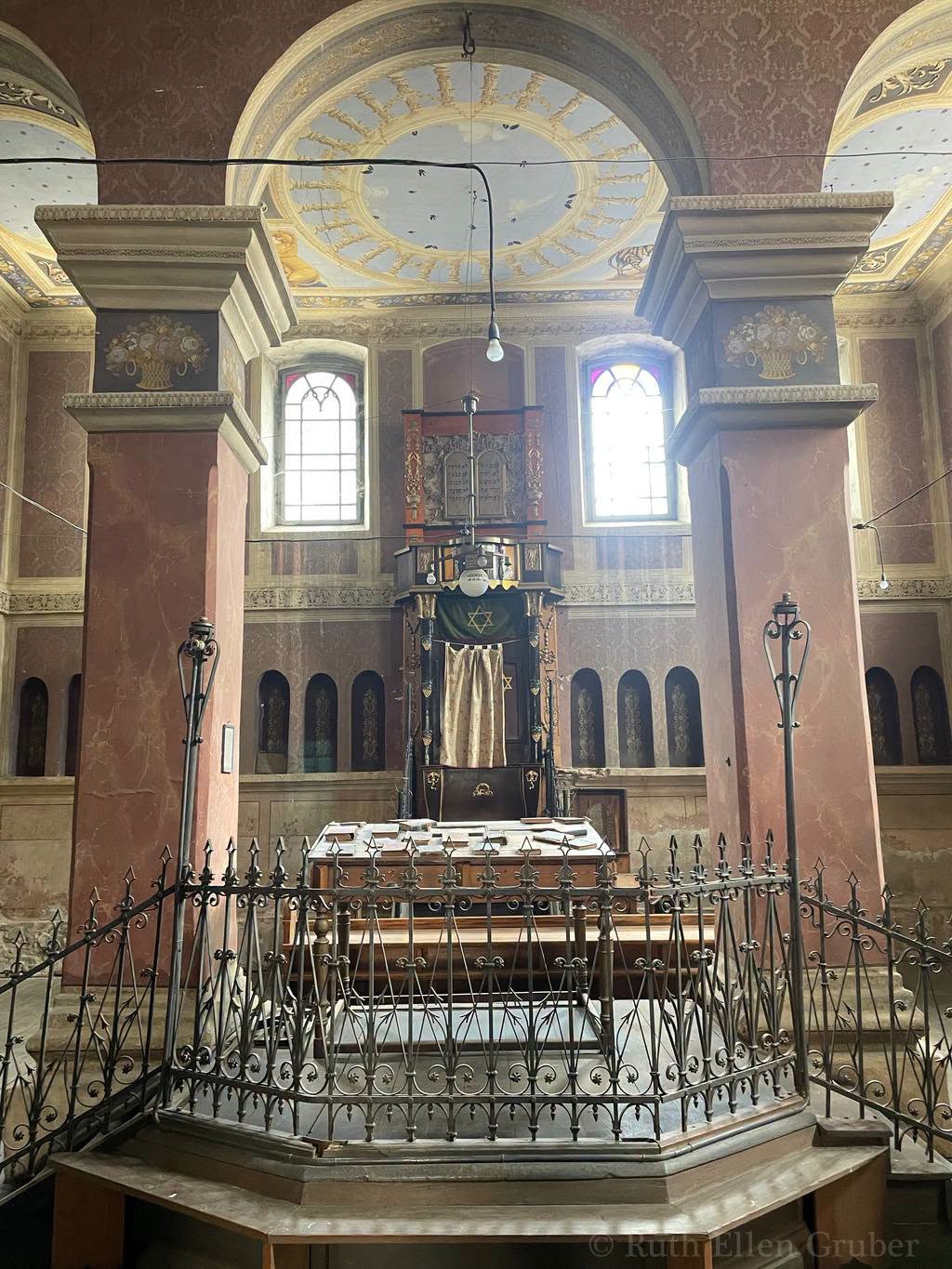
The Great Synagogue in Siret looks like an ordinary building, with slightly arched windows. The interior of the building is decorated with skill and artistic sensitivity.
Among the rabbis who served at this synagogue, Reb Burstyn, Dr. Samuel Freifeld, and Reb Baruch Hager (of the Vijnița Hasidic dynasty) are particularly noteworthy. Rabbi Freifeld studied in Basel (1905–1909) and served as rabbi in Nové Mesto (Slovakia) before being called to Siret, where he died suddenly in 1930.
The rise to power in 1937 of the Goga-Cuza government led to the enactment of anti-Semitic laws that triggered a series of persecutions against Jews: they were beaten in the streets, forced to keep their shops open on Shabbat, etc. In June 1940, new laws adopted by the Ion Gigurtu government provided for the confiscation of property, the expulsion of ethnic Jews from schools and public office, and a ban on Jewish doctors treating patients of other ethnicities.
By the end of 1940, only 1,614 Jews (14.2% of the population) remained in Siret. When the Romanian Army was forced to retreat from Northern Bukovina, many Jews from Siret were killed.
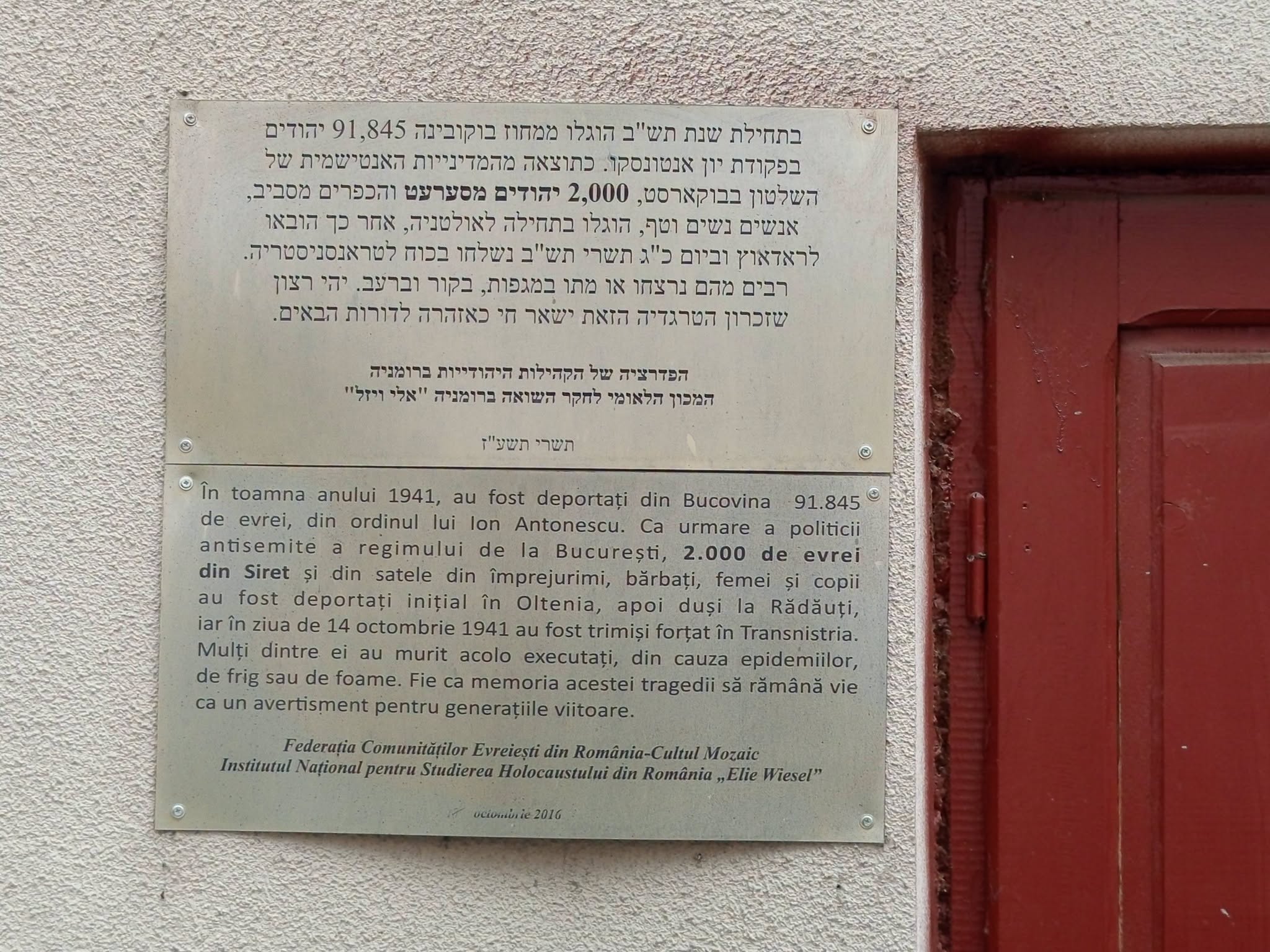
On July 20, 1941, all the Jews from Siret were rounded up into a ghetto and marched on foot to Dornești. There, they were loaded onto a freight train and, after 14 days, arrived in Calafat. Two months later, in October 1941, they were sent back to Bukovina, where they were subjected to two weeks of forced labor, and then deported to Transnistria, to the camps at Berșad and Moghilev Podolsk. Eighty percent of the Jews died from disease, cold, and starvation.
Inside the synagogue building, there are two plaques inscribed with the names of 400 Jews from Siret who died in the camps of Transnistria.
Shabbat Shalom!



Gesta recommendations:
Pedophile priest arrested in Vaslui County
On Tuesday, the Orthodox Diocese of Huși suspended from service a priest from Vaslui County who was placed in pre-trial detention over the weekend on suspicion of sexual assault, rape of a minor and sexual acts with a minor. The priest of the parish of Parpanița, part of the town of Negrești, is now barred from performing any religious services. According to the police investigation, the priest…

Trump is the best campaign manager: Ukrainians trust their president more since he started attacking Zelensky
We're getting close to the point where, if a head of state or government wants to win the next election, they should pay Donald Trump to publicly badmouth them. According to a survey conducted by the Kyiv International Institute of Sociology (KIIS) between October 8 and 16, 54 percent of Ukrainians trust Volodymyr Zelensky, while 41 percent do not.

Reuters: Iran is deliberately dragging out negotiations until the midterm elections
Iran is deliberately prolonging negotiations with the United States in order to politically weaken Donald Trump ahead of the November 3 midterm elections, G4Media reported, citing Reuters, which in turn cited three senior Iranian officials and an additional Iranian source. “The clerical leadership is determined not to give Trump a political victory,” the news agency quoted one of the anonymous…

Famine could strike Afghanistan this winter
About 19.2 million Afghans, more than a third of the country's population, are threatened by an acute food supply crisis, the UN Office for the Coordination of Humanitarian Affairs (OCHA) warned on Tuesday. "During the winter period from November to April, the number of people facing acute food insecurity is expected to reach 19.2 million," said Olga Cherevko, OCHA's spokesperson for Afghanistan,…

East Libya approves disputed Turkish maritime agreement, Athens and Nicosia outraged
On Tuesday, the parliament of eastern Libya approved the maritime boundary agreement that Turkey signed in 2019 with the Tripoli-based Government of National Accord, then internationally recognized. This retroactively grants the blessing of the eastern part of the country, controlled by General Khalifa Haftar, to a treaty that Greece, Cyprus and Egypt have considered unlawful from the outset.