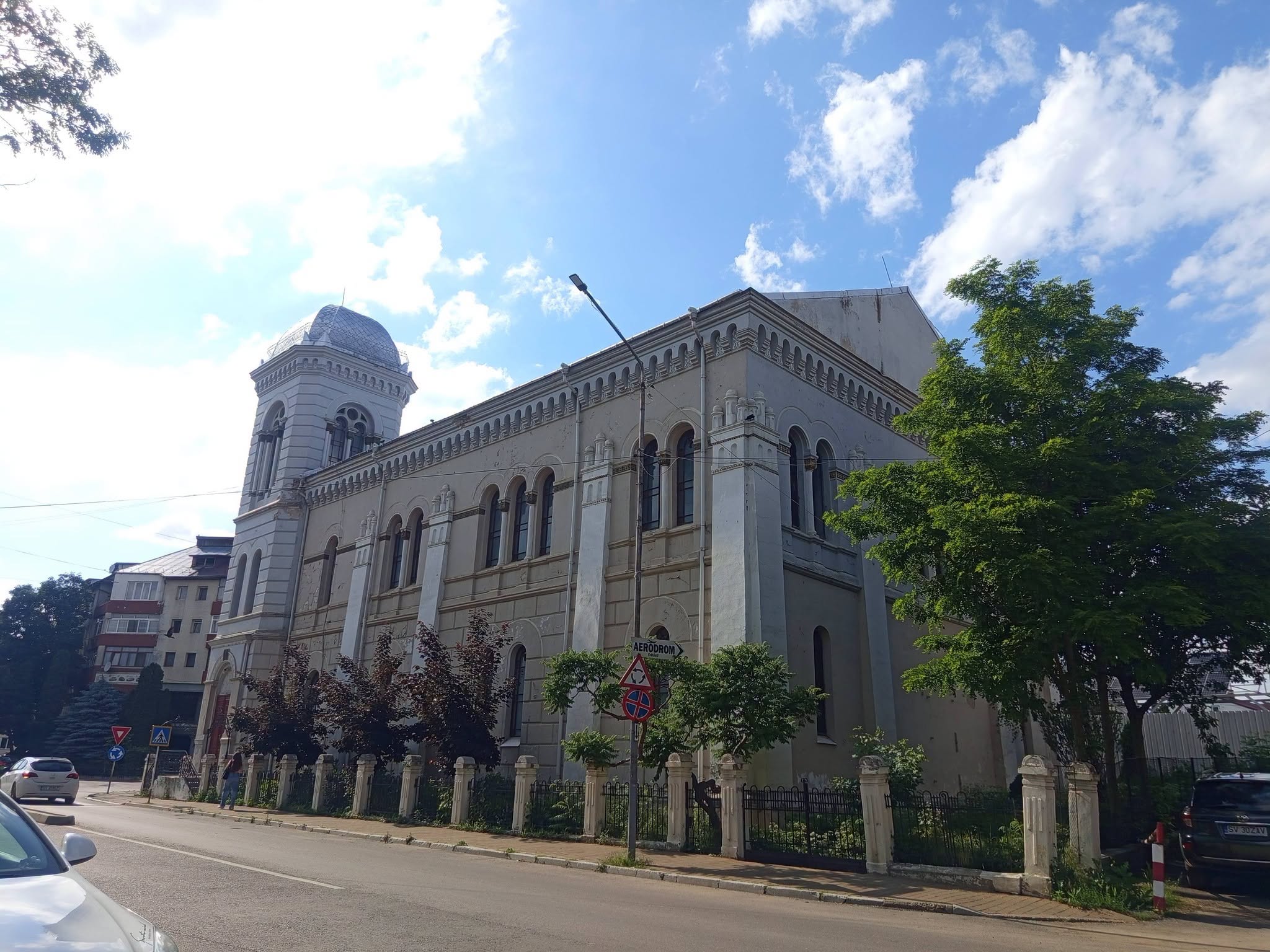
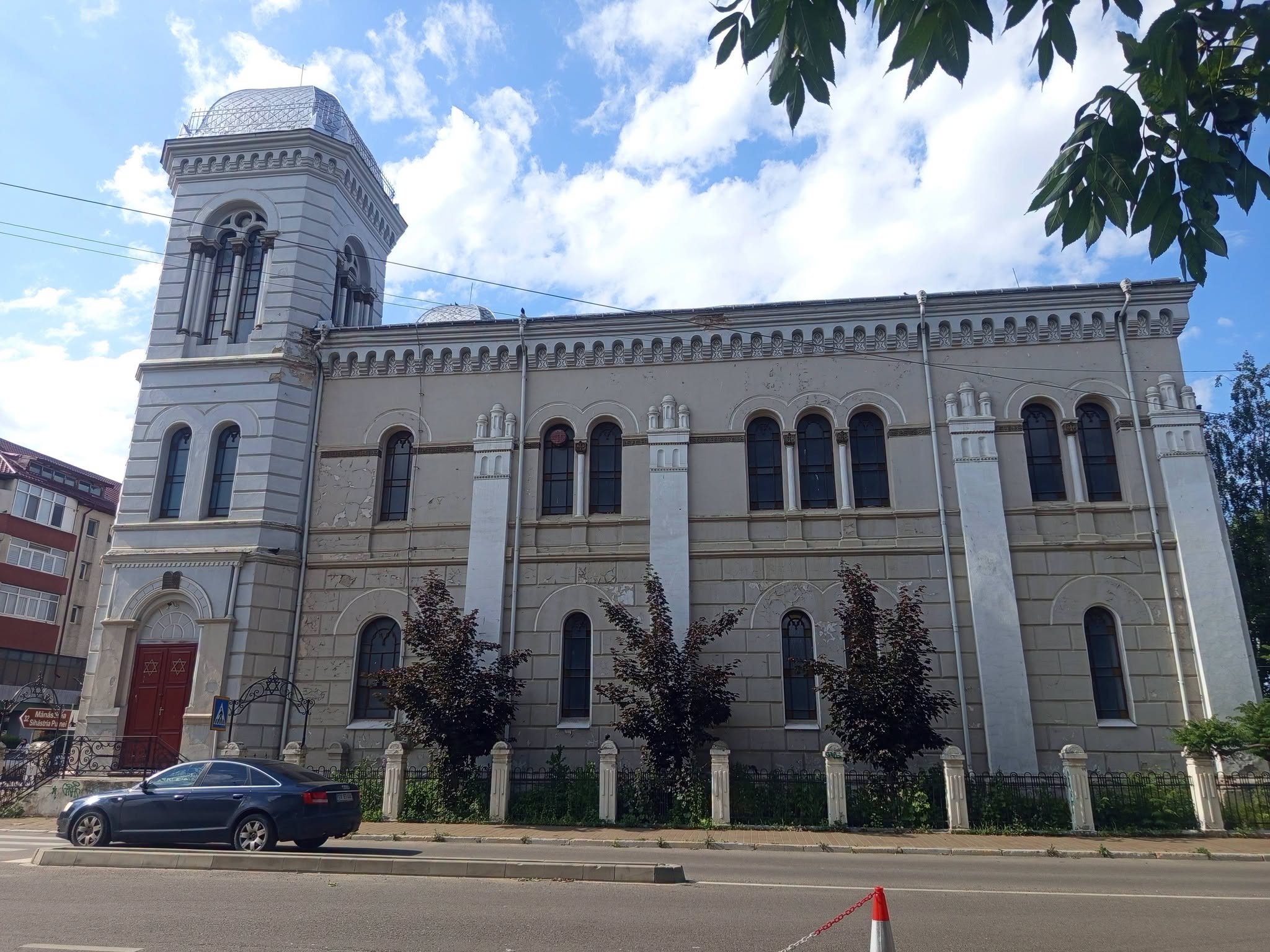
Since it’s Shabbat, let me introduce you to another synagogue in Romania: the Great Synagogue in Rădăuți.
The first synagogue in Rădăuți was built in 1830 by Eliahu Gewölb in the town center.
As the Jewish population in the town grew, the synagogues became too small, and in 1880, during Emperor Franz Joseph I’s visit to Rădăuți, a delegation of Jews asked for his support. They needed a plot of land to build a large synagogue. The emperor agreed, granting the Jewish community a plot of land in the city center, near the park.
Construction of the synagogue was delayed for several years due to disagreements between Orthodox and Modernist Jews regarding its design. While the Orthodox wanted the temple to be built in the traditional synagogue style, the modernists wanted a temple similar to the one in Chernivtsi, with a round dome on top. A compromise was eventually reached, and the temple was built in the style of the Chernivtsi Temple but with two twin towers instead of a dome. The west wing was reserved for women.
The temple was inaugurated on August 18, 1883, on Emperor Franz Joseph I’s birthday, with the first service celebrated by the city’s new chief rabbi, Yitzhak Kunstadt.
The Great Temple in Rădăuți was built in the Neo-Moorish style; it is a massive structure with two tall towers topped by domes, which give the building the appearance of an Orthodox cathedral. The main entrance is located beneath one of the three arches supported by four massive columns. The synagogue’s windows are circular and topped with arches. The interior features decorations in a blend of styles: Renaissance, Baroque, and Moorish.
The town of Rădăuți had chief rabbis who led the community’s religious activities. This role was held by Hirsch Shapiro (1861–1881), Yitzhak Rabin Kunstadt (1883–1909), Dr. Yaacov Hoffman (1912–1923), Dr. Yaacov Nacht (1925–1928), Dr. Shimshon Stein (1930–1932, 1933–1940), Yitzhak Rabinowitz (1932–1933), and Yisroel Hornick (1945–1947). The latter was the last chief rabbi of Rădăuți.
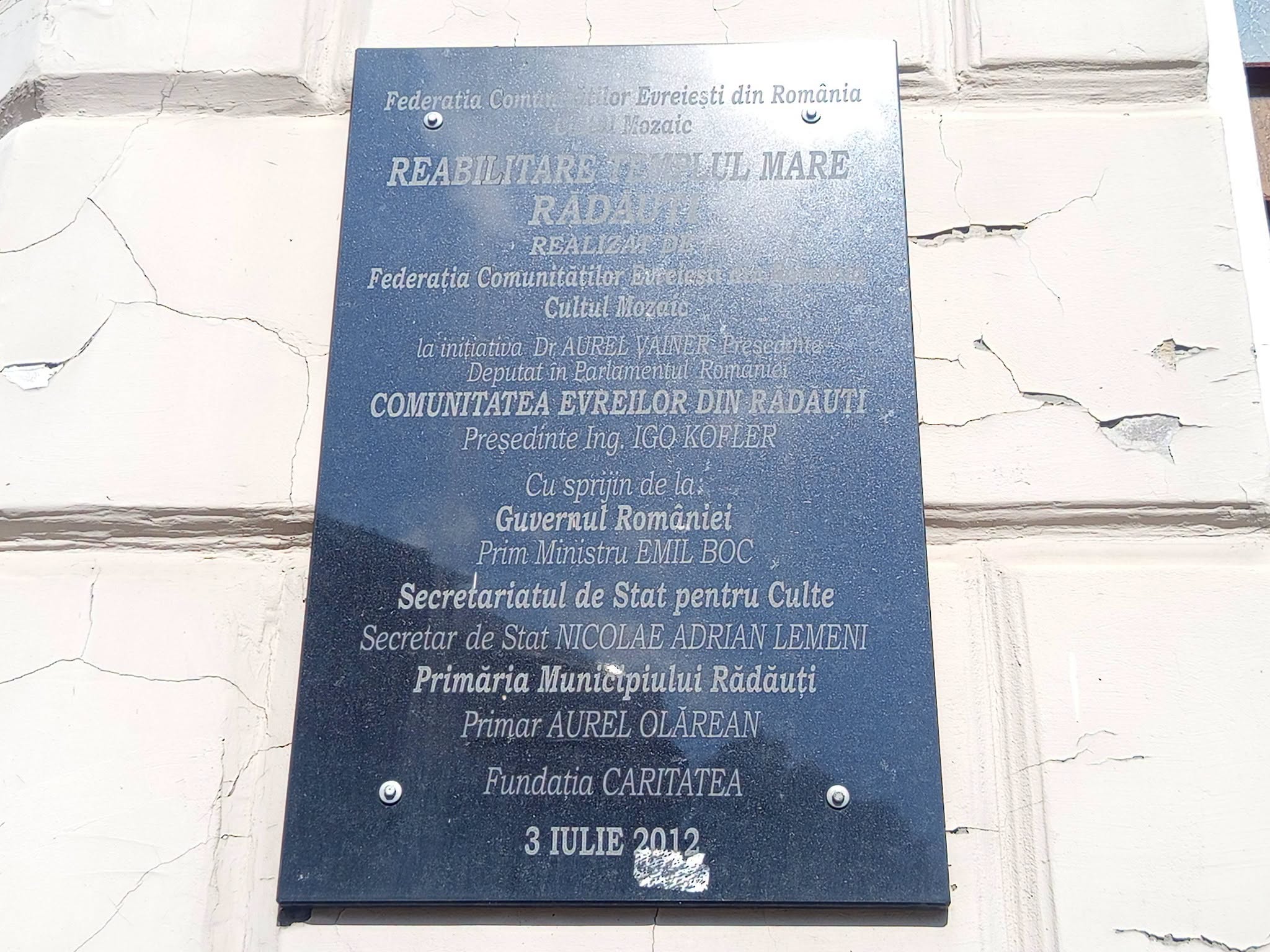
In the list of synagogues in Romania published in the work “Seventy Years of Existence. Six Hundred Years of Jewish Life in Romania. Forty Years of Partnership FEDROM–JOINT,” published by the Federation of Jewish Communities in Romania in 2008, it was noted that the Great Synagogue in Rădăuți was still in use.
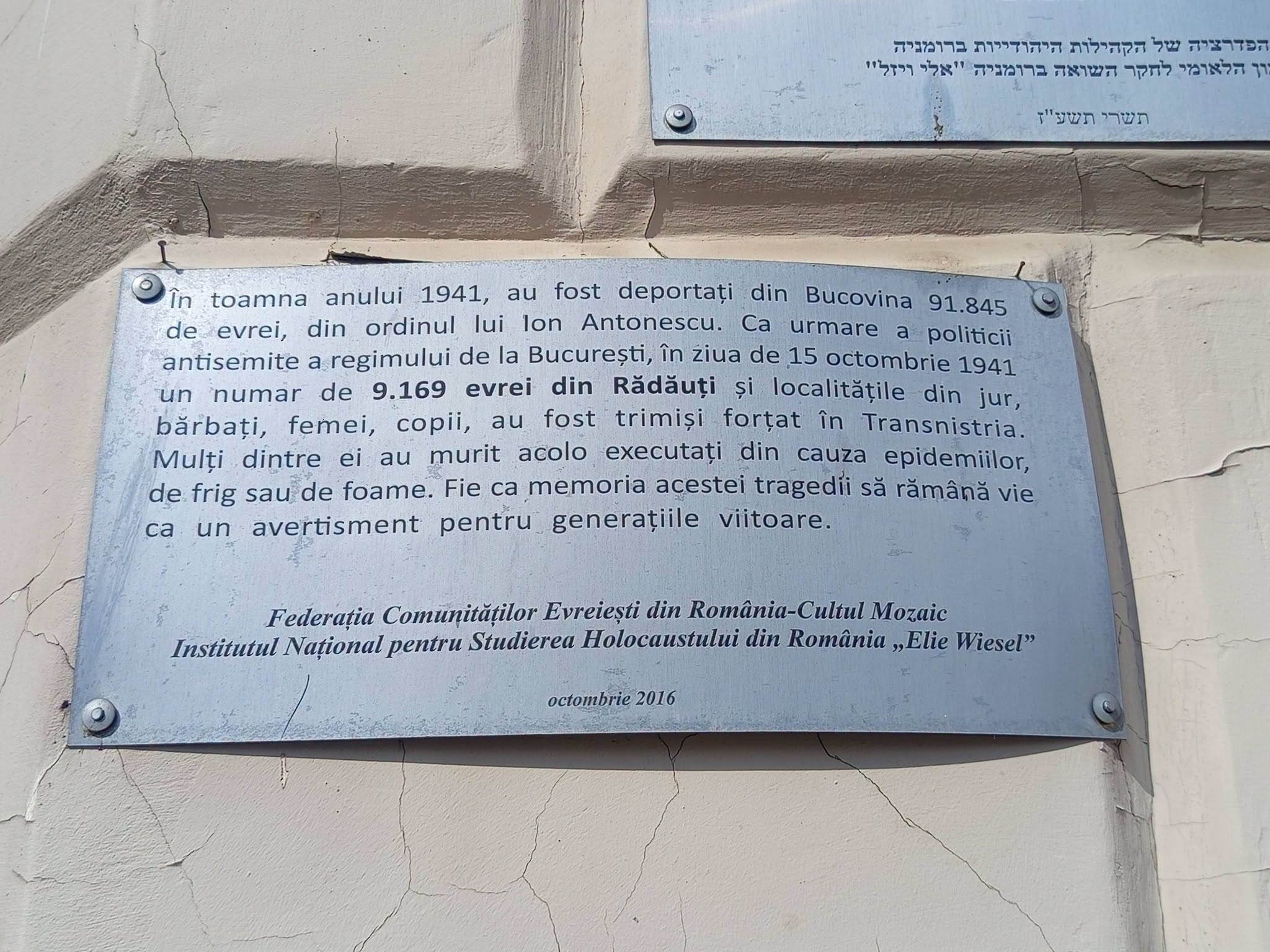
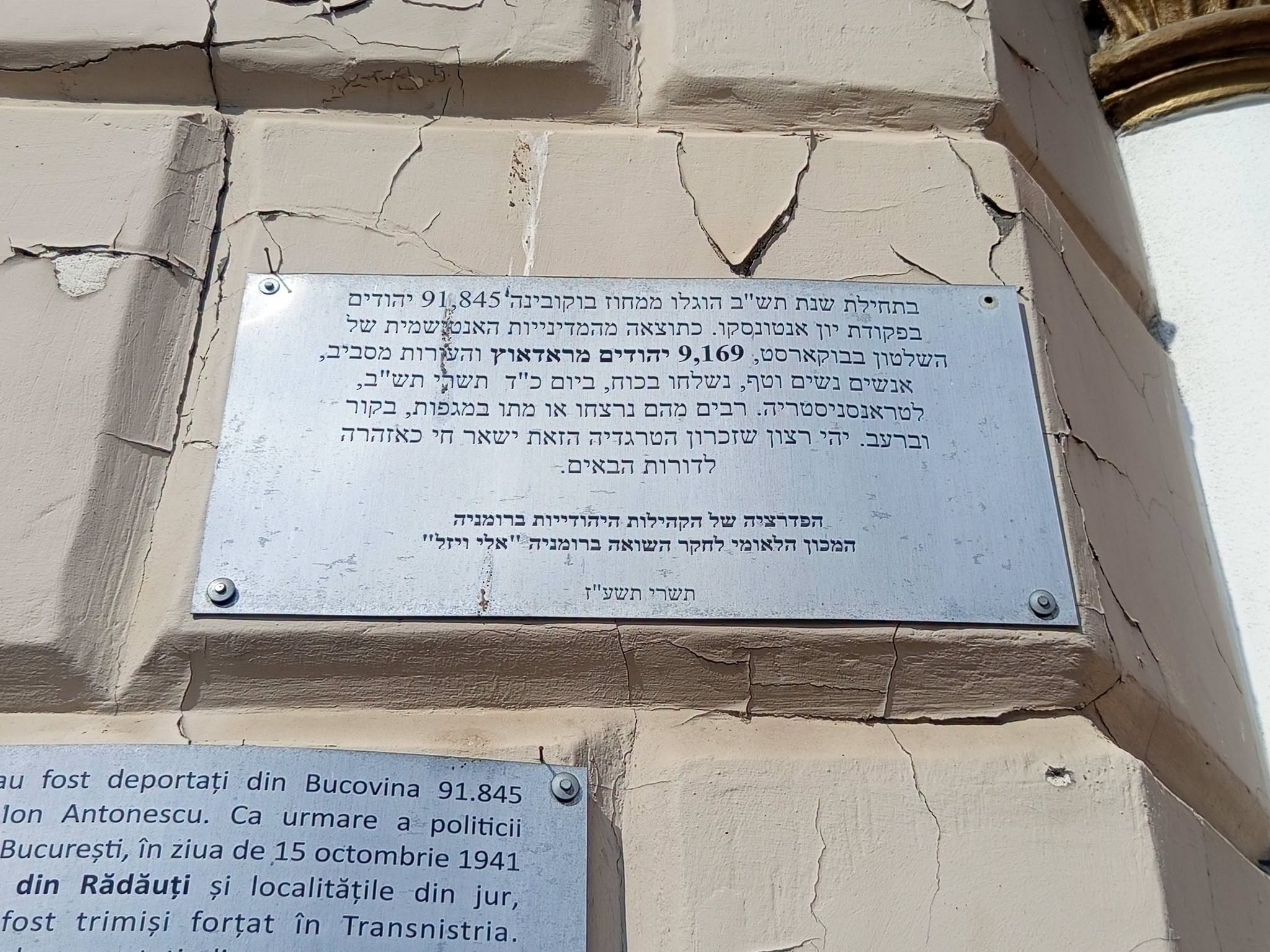
In the fall of 1941, 91,845 Jews were deported from Bukovina on the orders of Ion Antonescu. As a result of the anti-Semitic policies of the regime in Bucharest, on October 15, 1941, 9,169 Jews from Rădăuți and the surrounding towns—men, women, and children—were forcibly sent to Transnistria. Many of them died there from epidemics, cold, or starvation.
May the memory of this tragedy remain alive as a warning to future generations!
Shabbat Shalom!



.jfif)




.jfif)
Gesta recommendations:

Pedophile priest arrested in Vaslui County
On Tuesday, the Orthodox Diocese of Huși suspended from service a priest from Vaslui County who was placed in pre-trial detention over the weekend on suspicion of sexual assault, rape of a minor and sexual acts with a minor. The priest of the parish of Parpanița, part of the town of Negrești, is now barred from performing any religious services. According to the police investigation, the priest…

Trump is the best campaign manager: Ukrainians trust their president more since he started attacking Zelensky
We're getting close to the point where, if a head of state or government wants to win the next election, they should pay Donald Trump to publicly badmouth them. According to a survey conducted by the Kyiv International Institute of Sociology (KIIS) between October 8 and 16, 54 percent of Ukrainians trust Volodymyr Zelensky, while 41 percent do not.

Reuters: Iran is deliberately dragging out negotiations until the midterm elections
Iran is deliberately prolonging negotiations with the United States in order to politically weaken Donald Trump ahead of the November 3 midterm elections, G4Media reported, citing Reuters, which in turn cited three senior Iranian officials and an additional Iranian source. “The clerical leadership is determined not to give Trump a political victory,” the news agency quoted one of the anonymous…

Famine could strike Afghanistan this winter
About 19.2 million Afghans, more than a third of the country's population, are threatened by an acute food supply crisis, the UN Office for the Coordination of Humanitarian Affairs (OCHA) warned on Tuesday. "During the winter period from November to April, the number of people facing acute food insecurity is expected to reach 19.2 million," said Olga Cherevko, OCHA's spokesperson for Afghanistan,…

East Libya approves disputed Turkish maritime agreement, Athens and Nicosia outraged
On Tuesday, the parliament of eastern Libya approved the maritime boundary agreement that Turkey signed in 2019 with the Tripoli-based Government of National Accord, then internationally recognized. This retroactively grants the blessing of the eastern part of the country, controlled by General Khalifa Haftar, to a treaty that Greece, Cyprus and Egypt have considered unlawful from the outset.